The planet has been sending signals for decades. Rising seas, retreating glaciers, unprecedented heat waves, increasingly devastating wildfires... The last 11 years have been the warmest on record. In 2025, the average global temperature reached 1.44°C above pre-industrial levels, and for the first time in history, the three-year average — 2023, 2024, and 2025 — exceeded the 1.5°C threshold set by the Paris Agreement. The question is no longer whether climate change is happening. The question is what signal we choose to send back.
On June 5, in this very context, World Environment Day 2026 arrives under the theme "Our planet, our future — Now for Climate," with Azerbaijan as host country and climate change as its central focus.
The key question is no longer when we will act on the climate crisis — but whether we will act in time.
What you will learn about in this article:
What is World Environment Day? Origin and importance
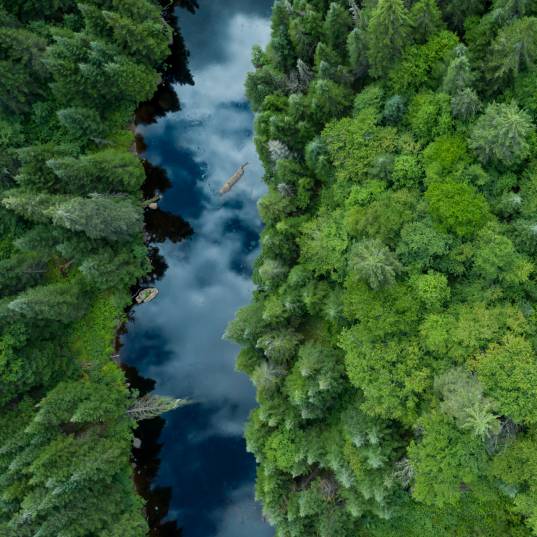 World Environment Day is one of the most important dates in the official United Nations calendar to raise awareness among governments, companies and civil society of the importance of promoting climate and environmental action, sparing no effort or resources.
This date has been celebrated every June 5 since 1973, when it was established as World Environment Day at the United Nations Conference on the Human Environment in Stockholm, also known as the Stockholm Summit.
“One Earth” was the catchphrase of that conference, and this year 2024, more than 50 years later, it still carries the same, or perhaps even more, sense of urgency and commitment for those of us who threaten it. Without the diversity of food on which we subsist, without the clean air it provides us, without the water we drink from it, or the climate that makes life possible, humanity could not survive. Without the balance and resources of nature, the Earth would not be able to offer us what it does today.
“The Stockholm Conference was the first UN conference with the word “environment” in its title.”
One of its achievements was the creation of the United Nations Environment Programme (UNEP), an organization whose main objective was to become the environmental conscience of the United Nations and the world. It also designated June 5th as Environment Day, a date that reminds us that politicians, administrations, companies, and the civilian population must change their attitudes and truly live in a sustainable manner.
World Environment Day 2026: Urgent Climate Action
Today, the very foundations of life as we know it — biodiversity, water, clean air, fertile soil — face unprecedented challenges. Climate change is the sustained, long-term shift in global temperatures and weather patterns caused by greenhouse gas (GHG) emissions, driven largely by the burning of fossil fuels. Its consequences reach across the environment, the economy, and the lives of millions of people.
"The planet doesn’t argue. It doesn’t negotiate. It sends signals—rising seas, raging wildfires, heatwaves, melting glaciers. For decades, the world has heard the climate story—warnings, targets, distant deadlines. Too often, the response has been clouded by noise: delay, distraction, denial". That is how UNEP describes it — and the data bear it out. The 1.5°C limit agreed in Paris is already being exceeded, and the consequences are visible: without immediate action, exposure to polluted air could increase by 50% within this decade.
Climate change is intensifying extreme weather events, droughts, wildfires, the die-off of animal and plant species, flooding of rivers and lakes, the displacement of climate refugees, and the destruction of livelihoods and economic resources — particularly in developing countries.
Yet World Environment Day 2026 is not only a warning — it is also a map of hope. Solar panels on millions of rooftops, wind turbines reshaping the horizon, cities redesigned around people, and forests restored. According to an Ember report cited by the UN, renewable energy surpassed coal-generated electricity globally for the first time in 2025, with solar and wind power covering 100% of the increase in electricity demand that year.
A Global Campaign: #NowForClimate
Under the #NowForClimate campaign, UNEP is calling on governments, businesses, and citizens to send the Earth a clear signal: one from a humanity that has decided to act. Keeping global warming below 1.5°C will require cutting annual GHG emissions in half by 2030.
The fight against climate change demands action on two fronts simultaneously: mitigation — reducing GHG emissions through the transition to renewable energy, energy efficiency, and ecosystem protection — and adaptation, which means preparing societies and territories to cope with impacts that are now inevitable.
The theme "Now for Climate" goes beyond emissions reduction. It calls for transforming the systems that underpin our economies and rebuilding the relationship between societies and the climate. A transformation that, in turn, creates jobs, reduces inequality, and protects the health of the planet and its people. Much remains to be done — but 2026 could be the year the world turns alarm signals into concrete action.
Fuente:
Journalist and content manager specialising in sustainability. Trained at the Carlos III University of Madrid, she works at the intersection between the environmental, the human and the organisational from a conscious and committed point of view.
Her texts seek to provide clarity and perspective, integrating a critical, conscious and documented look at the challenges of the present.
Collaborates in
Sustainability for allSpecializing in
Climate change
Sustainability
Environment